Reshaping Misshapen Teeth with Full-Mouth Bonding: A Case Study
Updated: Jun 13
When one tooth is an odd shape, a single repair can fix it. But when teeth across the whole smile are irregularly shaped, fixing them one at a time often is not enough — the smile needs to be refined as a whole.
This case study from SOL Dental Arts in Maspeth, Queens shows how minimally invasive full-mouth bonding reshaped misshapen teeth — improving the smile cohesively while preserving natural enamel.
What is full-mouth bonding?
Full-mouth bonding is a minimally invasive, additive treatment that uses tooth-colored composite to refine the shape of many teeth across the smile. When tooth anatomy is irregular in several places, treating teeth in isolation tends to leave the smile looking patchy. Full-mouth bonding addresses contour, symmetry, and surface flow across multiple teeth together, so the smile is refined as one cohesive whole. Its appeal is the conservative philosophy: improve form and esthetics while respecting healthy tooth structure.
The case: reshaping misshapen teeth across the smile
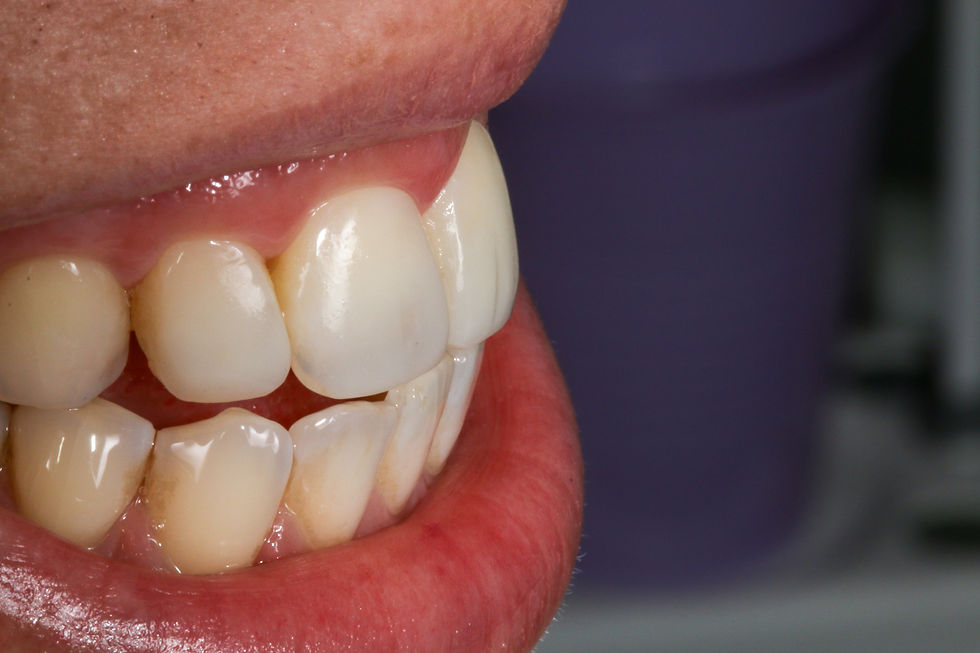
This patient had mal-shaped teeth across the smile — irregular tooth anatomy that affected the overall appearance, not just one or two teeth. Isolated repairs would not have created the balance they wanted.
The team used an additive full-mouth bonding approach: building and refining shape across multiple teeth at once, rather than aggressively reducing the natural teeth. The focus was contour, proportion, and symmetry — refining the whole smile while preserving enamel.
How full-mouth bonding is done
A full-mouth bonding case at SOL Dental Arts follows a careful sequence:
Full-smile esthetic analysis — assessing the whole smile and where the proportions and shapes are off.
Additive composite bonding across multiple teeth — building and refining shape, tooth by tooth.
Contour, proportion, and symmetry refinement — balancing the teeth so the smile flows naturally.
Final finishing and polish — finishing each tooth so the surface texture and shine look natural.
Because the approach is additive, it improves the whole smile while preserving healthy tooth structure — with no aggressive preparation.
Is full-mouth bonding the same as veneers?
No. Full-mouth bonding is a composite-based, additive approach — the dentist builds and shapes tooth-colored material directly on the teeth. Veneers are lab-fabricated restorations. Both can improve shape and esthetics, and each has its place; the right choice depends on the case, the goals, and how much longevity and structural change is appropriate.
The result
By reshaping the misshapen teeth with additive composite across the smile, this case achieved a more harmonious result while keeping treatment conservative. A well-planned full-mouth bonding case should:
Preserve natural enamel
Improve the harmony of the whole smile
Deliver a conservative full-smile enhancement
Provide natural-looking contour correction
Frequently asked questions
What does additive full-mouth bonding mean?
It means the treatment focuses on building and refining tooth shape rather than aggressively reducing the natural teeth. The composite is added to the teeth, preserving healthy structure.
Is this different from veneers?
Yes. Full-mouth bonding is a bonding-based approach using composite, rather than a plan built around lab-fabricated veneers. Both improve esthetics, but they are different treatments.
Can full-mouth bonding still look natural?
Yes — when anatomy, surface texture, and proportions are handled carefully, full-mouth bonding can look very natural across the whole smile.
Does it preserve my natural teeth?
That is a core advantage. Because the approach is additive, it is designed to improve the smile while respecting and preserving healthy tooth structure.
Reshaping misshapen teeth with bonding?
At SOL Dental Arts we offer composite bonding for patients across Maspeth and Queens. You might also like how long composite bonding lasts and closing multiple smile gaps with bonding.
Request an appointment → or call (917) 983-4560.
More from SOL Dental Arts: explore related cases — front-tooth reshaping with bonding and a composite veneer for a discolored tooth.
Related reading: Composite bonding vs. porcelain veneers.