Teeth Whitening in Maspeth, Queens: What Actually Works
Updated: Jun 14
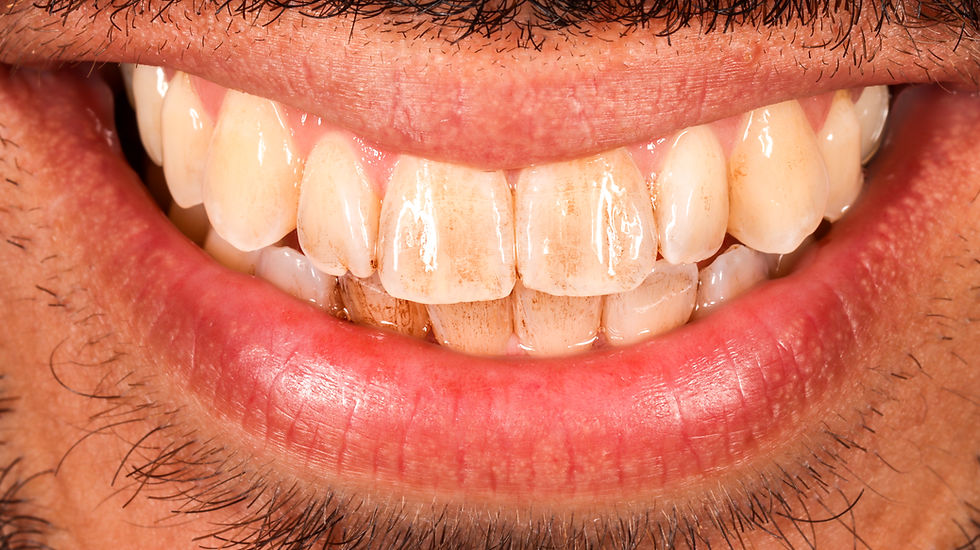
Teeth whitening can be simple, but the decision is not always simple. Some stains respond beautifully to whitening. Others barely change because the color is inside the tooth, related to old restorations, or caused by crowns, veneers, bonding, or fillings that do not bleach. A good whitening plan starts by identifying what is actually causing the discoloration.
How whitening works
Most whitening products use hydrogen peroxide or carbamide peroxide. These agents break stain molecules into smaller pieces so the tooth looks brighter. Whitening works on natural tooth structure; it does not whiten porcelain crowns, veneers, composite bonding, or tooth-colored fillings. That is one reason a dental exam before whitening can save frustration.
Professional whitening versus store-bought whitening
Over-the-counter strips can help mild surface discoloration when used correctly. Professional whitening is more controlled and can be customized around sensitivity, gum protection, tooth shade, and the timing of other cosmetic treatment. Take-home trays are useful when you want gradual, controlled brightening and the ability to refresh the shade later.
Why whitening does not work for every smile
Yellow-toned natural teeth often respond better than gray or brown discoloration. A tooth that darkened after trauma, a root canal, or an old restoration may need a different approach. If the visible color problem is actually old bonding, mismatched crowns, or thin enamel showing darker dentin underneath, whitening alone may not create the result you want.
Sensitivity and safety
Temporary sensitivity is common with whitening, especially when teeth already react to cold. Using the right concentration, spacing out sessions, treating gum inflammation first, and using desensitizing strategies can make a big difference. Whitening should be delayed if there is untreated decay, leaking fillings, gum irritation, or exposed root surfaces that need attention first.
When bonding or veneers may be better
Whitening changes color, not shape. If the concern is chipped edges, worn teeth, peg laterals, spaces, old bonding, or a tooth that is darker than the rest, composite bonding or porcelain veneers may be a better match. Often the best sequence is to whiten natural teeth first, then match any bonding, veneers, or crowns to the new shade.
Teeth whitening consultation in Maspeth
At SOL Dental Arts in Maspeth, Queens, we evaluate the type of stain, existing dental work, gum health, and sensitivity before recommending whitening. The goal is a brighter smile that still looks natural and works with any future cosmetic or restorative plan.
More from SOL Dental Arts: teeth whitening and cosmetic dentistry. Related patient cases: prophylaxis and bleaching and minimally invasive veneer and bleaching refinements.
Related reading: Gum disease: early signs.