Peg Lateral Teeth Bonding in Maspeth, Queens
Updated: Jun 13
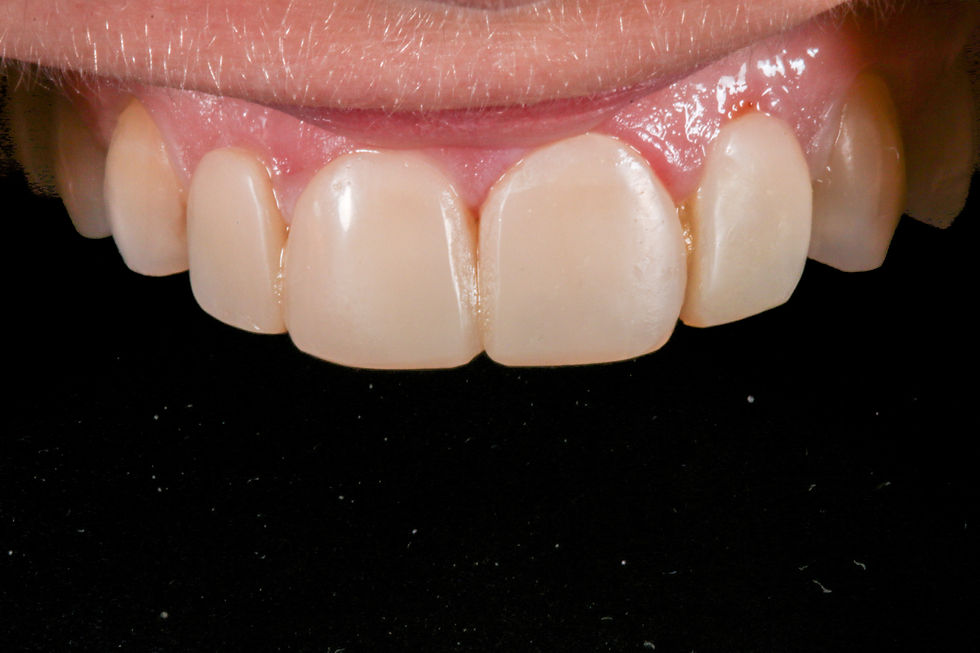
After treatment: the upper lateral incisors were widened and reshaped with non-invasive cosmetic composite bonding.
Peg lateral incisors can make the upper front smile look narrow, uneven, or underdeveloped even when the surrounding teeth are healthy. In this case, the patient had peg-shaped upper lateral incisors on both sides of the smile. The goal was to create better tooth proportion and a more balanced smile without preparing the teeth for crowns or porcelain veneers.
At SOL Dental Arts in Maspeth, Queens, the upper lateral incisors—teeth 7 and 10—were restored with non-invasive cosmetic composite bonding. The treatment was designed to add width, improve symmetry, and create a natural transition between the central incisors and canines.
This is a conservative smile enhancement case. The objective was not to redesign the entire smile, but to correct the specific shape discrepancy that made the lateral incisors look too small.
The concern: small peg-shaped lateral incisors
Before treatment: the upper lateral incisors appeared small and narrow compared with the adjacent front teeth.
Peg laterals are smaller-than-average lateral incisors. Because these teeth sit between the central incisors and canines, their shape has a major effect on the rhythm and balance of the smile. When the laterals are undersized, the central teeth can appear larger, the canines can look more prominent, and the smile can feel less harmonious.
The patient wanted the lateral incisors to look more proportional while still keeping a natural result. That made composite bonding a strong option for this case.
The treatment: non-invasive cosmetic bonding
Before close-up: both upper lateral incisors were narrow and peg-shaped, affecting the transition across the front teeth.
Composite bonding uses tooth-colored resin that is added directly to the tooth, shaped chairside, and polished to blend with the surrounding enamel. For peg laterals, bonding can build out the missing width and contour without the more aggressive preparation often associated with crowns or some veneer cases.
In this case, bonding was added to the upper right and upper left lateral incisors to create a fuller, more proportional appearance. The shapes were refined to make the laterals look like natural parts of the smile rather than isolated restorations.
The treatment fits the broader philosophy of conservative cosmetic dentistry: improve the smile while preserving healthy tooth structure whenever possible.
What was changed?
Before detail view: the small lateral incisors created a visible proportion discrepancy across the upper anterior smile.
The bonding focused on widening and reshaping the lateral incisors, improving the tooth-to-tooth transition, reducing the visual discrepancy between the central incisors and canines, and creating a more balanced anterior smile.
The result needed to be subtle. If too much material is added, peg lateral bonding can look bulky or artificial. The goal is to create the appearance of properly proportioned lateral incisors while maintaining natural contours and polish.
The result: a balanced upper anterior smile
After treatment: non-invasive composite bonding improved the width, contour, and symmetry of the upper lateral incisors.
After bonding, the upper lateral incisors looked fuller and more proportional. The smile had a smoother transition from the central incisors to the canines, and the peg-shaped appearance was corrected without changing every tooth in the smile.
This case shows how a focused cosmetic improvement can create a noticeable change while remaining conservative. The final result is meant to look natural, not overbuilt.
Final close-up: the restored lateral incisors blend into the surrounding teeth with a more natural proportion.
Why bonding instead of veneers?
Porcelain veneers can be an excellent option for broader cosmetic changes, color changes, or cases requiring more complete control of tooth shape. This case was more focused. The patient needed added contour and proportion on the lateral incisors, not a full smile makeover.
Because the desired changes were additive and localized, non-invasive composite bonding allowed the lateral incisors to be reshaped while preserving the underlying teeth. For the right case, bonding can be a conservative alternative to porcelain restorations.
Who is a good candidate for peg lateral bonding?
Peg lateral bonding may be appropriate for patients with undersized lateral incisors, small spaces around the lateral incisors, minor shape asymmetry, or narrow upper front teeth. The best candidates typically have healthy tooth structure, a stable bite, and cosmetic goals that can be achieved with additive bonding.
When a case involves larger gaps, significant crowding, major color changes, or bite issues, other treatments such as orthodontics, veneers, or a combined plan may be more appropriate. A consultation helps determine which path best fits the patient’s goals and biology.
Peg lateral bonding in Maspeth and Queens
Patients from Maspeth, Middle Village, Ridgewood, Glendale, Elmhurst, and surrounding Queens neighborhoods often ask whether small lateral incisors can be improved without veneers. For select cases, composite bonding can create a more balanced smile with a
conservative approach.
Patients considering similar treatment can review more before-and-after cosmetic dental cases from SOL Dental Arts.
Use the SOL Dental Arts contact form to request a cosmetic bonding consultation.
Frequently asked questions
Can peg lateral teeth be restored with bonding?
Yes. When the case is appropriate, composite bonding can widen and reshape peg lateral teeth without preparing the teeth for crowns or veneers.
Is bonding for peg laterals invasive?
Bonding can often be completed with little or no tooth reduction, depending on the bite, tooth shape, and desired result.
Do peg laterals always need veneers?
No. Porcelain veneers may be useful for some cases, but composite bonding can be a conservative option when the goal is focused shape and proportion correction.
How long does composite bonding last on peg laterals?
Bonding can last for years, but it may need polishing, repair, or replacement over time. Longevity depends on bite forces, habits, hygiene, diet, and routine dental care.
How do you maintain bonded peg laterals?
Maintenance includes routine brushing, flossing, professional cleanings, avoiding hard biting habits, and periodic polishing or repair when needed.
Related reading: a conservative, no-prep fix for peg laterals and front-tooth reshaping with cosmetic bonding.
Related reading: Peg lateral teeth, explained · Peg lateral treatment.